
Last Updated on June 8, 2026 by Chicago Policy Review Staff
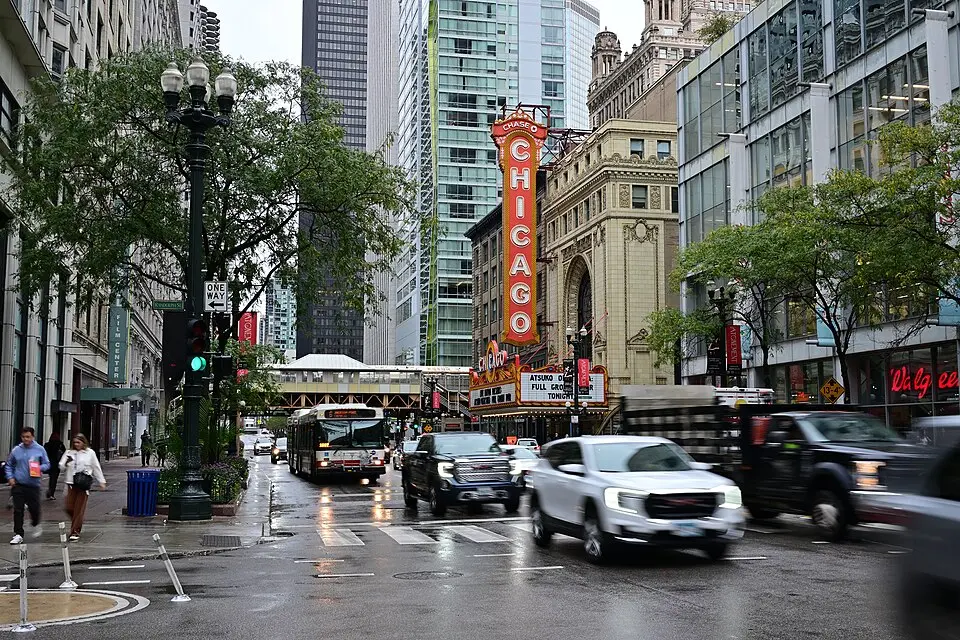
What started as a need for social space and activity has become a flashpoint in Chicago, sparking debate among residents, community activists, and city leaders. Large gatherings, commonly characterized as “teen trends” or “teen takeovers” have seen a surge in recent years, with some even escalating into violence. In March 2025, gunfire rang out as part of a trend in Streeterville. Later in November, a 14-year-old was fatally shot during a trend in the Loop just outside the Chicago Theatre, and eight others were wounded. At the end of March 2026, the trends spread to Hyde Park, as heavy police presence issued one arrest and multiple citations after teens damaged neighborhood vehicles. In May, 3 were shot along with 53 others arrested in connection to a takeover on the city’s 57th Street Beach. With summer in full swing, neighborhoods are continually on high alert for the next potential trend or takeover.
The trends themselves are not unique to the mid 2020s, or Chicago for that matter. Cities like Washington D.C. and Atlanta have also seen surges in teen gatherings resulting in violence and disruption. And while policymakers race to find an immediate solution, it is becoming clear that vacuum curfew policy will not totally shut down the party. More pressure must be put on the platforms amplifying these trends.
“A Curfew Doesn’t Stop a Bullet”
Since 1992, 11 p.m. curfew laws have been in place in Chicago for children who are 16 and younger. They were tightened in 2022, however, after a 16-year-old was shot near the city’s famous Cloud Gate “Bean” sculpture. At the time, Mayor Lori Lightfoot localized the curfew to Millennium Park, requiring that those 16 and younger be accompanied by a “responsible adult” after 6 p.m. in the area.
For law enforcement, curfews or “snap” curfews, which allow law enforcement to restrict youth from a certain area with as little as 30 minutes’ notice, seem like a no-brainer in light of the teen trends, as it would allow enforcement to take a vacuumed approach to prevention and punishment. If there were probable cause for a mass event (20 or more people), like a teen trend, police forces could deploy strategically and either make arrests or elicit fines.
Some local officials and community activists did not see the practicality in snap curfews. The ACLU of Illinois vehemently opposed the snap measure proposed by the Chicago City Council in light of the 2022 killing, citing that the passage could worsen tension between law enforcement and the Chicagoans they are trying to protect. Also in opposition was current Mayor Brandon Johnson. When put to a vote in 2025, the City Council passed the measure 27-22, but ultimately resulted in a veto by Johnson.
From there, Alderman Brian Hopkins of Chicago’s 2nd Ward, who initially proposed the snap curfew proposal, retooled a substitute ordinance. This one would uphold a ban on snap curfews while also codifying existing police powers, essentially bolstering police force preparation and presence ahead of events they believe could turn violent. Police would need objective facts to begin enforcement, such as social media posts, flyers, or recurring patterns of events. While there remained hope that this retooling could attract Johnson’s support, he has continued to push back, citing the need for accountability from parents.
The debate happening in the City Council is an endless one of policy: how current enforcement can be stronger and more prepared in the face of chaos. However, the effectiveness of enforcement remains vague, a likely result from the lack of data in recent years measuring direct impacts of curfews on public safety. Available data does, however, expose the racial disparities in curfew enforcement, raising caution for the extent to which policing should be upgraded. Specifically during the summer of 2020, a period of heavy protest, 75% of those charged with curfew violations were Black. Additionally, 90% of arrests between June 1-4 were Black Chicagoans. These figures were not unique when looking at 2020 in its entirety.

The continued debate amongst City Council members is clear indication that the solution is not easily binary. Teen trends are a product of improper supervision, insufficient funding for alternative programming, and preexisting safety concerns within neighborhoods. This does not, however, mean that policy cannot have a direct effect on the trend’s sobering.
TikTok and Takeovers: Social Media’s Role
Social media has provided a strategic baseline for Chicago’s teen trends, both from a planning and prevention perspective. When the trends themselves are organized, timing and location are usually spread through platforms like Instagram, Facebook, and TikTok. In turn, as the reach of events spans the respective platforms, parents and other concerned community members catch wind, allowing law enforcement to mobilize ahead of the events through their contact. When the trends transform into takeovers, as was recently seen in Hyde Park, scenes of the chaos find their own spread on social media, often inspiring other teens to plan and partake in trends, thus repeating the cycle infuriating Chicago citizens.
While City Council continually spar over where exactly to point fingers from a policy perspective, 6th Ward Alderman William Hall introduced an idea to help hold the social media platforms themselves accountable. According to his ordinance, if a mass event were detected and flagged by city officials or law enforcement, social media platforms with more than 1 million monthly users (like Meta and TikTok) would have six hours to acknowledge and remove the post, with reasonable explanation as to why it is harmful. Any platform that fails to respond altogether, in the original draft of the ordinance, would face a $50,000 fine per violation. The ordinance is currently being reworked amidst talks with city and tech leaders.
At first glance, the ordinance does feel relevant, as it feeds into the constantly-evolving debate of the degree to which free speech can be monitored. States like California have enacted strict legislation to prevent social media algorithmically-generated content that could be harmful to minors. On even more strict levels abroad, Australia banned those under 16 years old from using most major social media platforms in favor of reducing exposure to harmful content. While policy measures like these may seem extreme to those especially in the tech industry, in the instance of teen trends, reasonable moderation can be what separates one re-shared post from further possible juvenile deaths. Moderation itself is something that platforms like Facebook can continually improve upon, as upwards of 300,000 content moderation mistakes can be made on that website in a single day.
Implementing an ordinance like this would also give Chicago an opportunity to reinvent its image in youth violence prevention. Surveys within the past year paint a grim picture: nearly two-thirds of youth in the city reported witnessing community violence, with 23% of that group witnessing it weekly or more. In its narrowest application, the ordinance would decrease the amount of violent content youth are exposed to, along with their ability to partake. If the city can meaningfully enforce the ordinance and collect the fines, the revenue could be allocated to special funding for safer, community-based teen programming that many city advocates are calling for as a means of violence prevention.
Hall’s ordinance remains stalled in the aforementioned argument of City Council curfew decisions. This is unfortunate, because this ordinance outlines demonstrable action in a highly-nuanced and multi-faceted problem. In an era where social media platforms can be legally punished at the national stage for the deterioration in youth mental health, city-level ordinances like Hall’s are, at the least, a building block in the renaissance of Big Tech accountability. The reality is that social media is one of many uncomfortable conversations that need to be had in the process of mitigating violence from teen trends, and whether or not Chicago leaders are ready to have those conversations may define the city’s youth culture for years to come.