
Last Updated on April 21, 2026 by Chicago Policy Review Staff
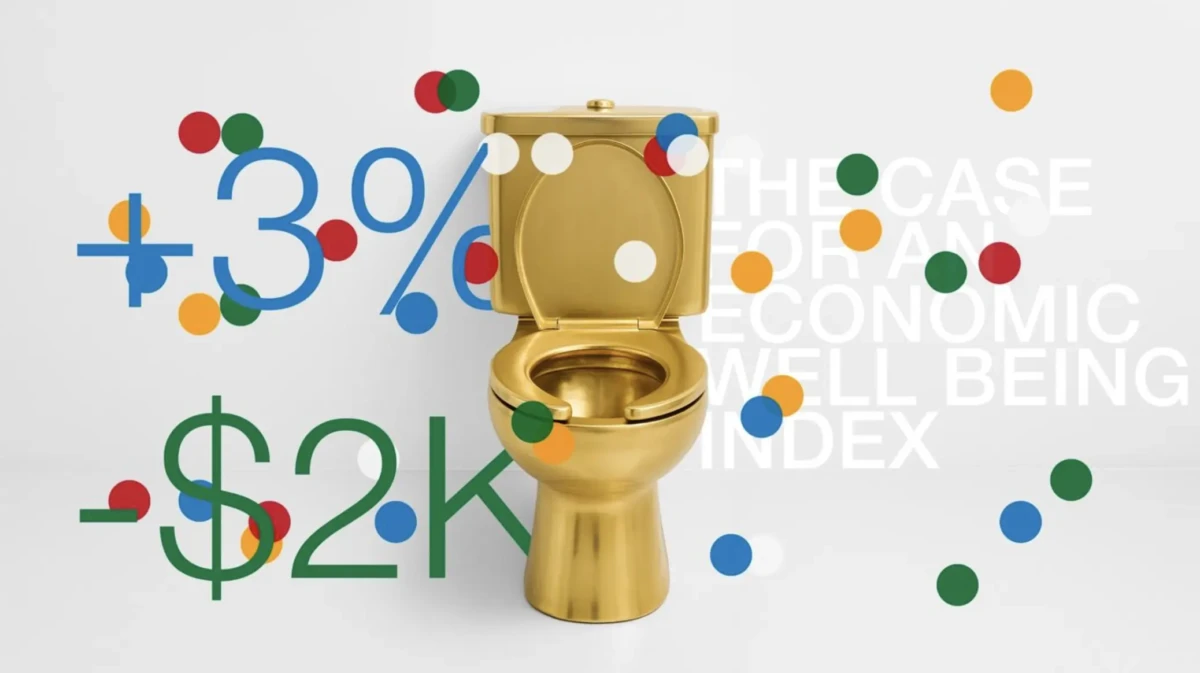
The thermometer measures internal body temperature, but it cannot diagnose cancer or judge overall health. Likewise, economic measures like GDP are similar, useful for gauging issues like the size of an economy, but not its condition. However, policymakers often lean on single indicators like GDP, inflation, or unemployment and miss problems that lie between them. Economists have long avoided a composite metric because combining many factors, — such as jobs, prices, mobility, opportunity, uncertainty and resilience — requires intense assumptions, judgments and trade-offs. Yet the public wants a clear answer to a simple question: Is the economy good? In service of that question, by continuing to rely on singular measures like GDP, economists risk correctly measuring the wrong thing. The public needs an economic well-being index.
One of the most fundamental problems in economics is the complete absence of a single, holistic measurement of the economy that could answer the basic question about the state of the economy. Without such a measure, public debate and expert commentary often shift from one statistic to another. One moment the focus is GDP, in another moment unemployment, inflation or wages. These shifts allow loose commentary, often with a degree of partisanship, without any stable standard. This moving goalpost creates confusion for the public and allows a high degree of expert subjectivity to remain unseen. However, any construction of an economic well-being index would not be immune to that subjectivity, but rather would force clarity around the assumptions, inputs and weights, because to argue about the state of the economy would then require open discussion of which indicators to include, how to weight them, and what definition of well-being to use, instead of selective emphasis on convenient numbers at a whim.
To see how other fields handle complex information is to notice clear examples. In electoral politics, polling averages and model-based forecasts combine many noisy polls into composite measures that give probability estimates for election outcomes. In medicine, clinicians synthesize multiple lab tests and clinical markers in order to give a broad assessment of individual health. Even commercial sports have a backdrop of statistics that aggregate up into composite win-loss probabilities, underpinning sports betting. Yet economics, which is arguably of more macro importance than the aforementioned, have no real framework to do open holistic review.
These practices make standards and trade-offs more explicit. In economics, by contrast, commentary often relies on a shifting set of empirical measures that can mask underlying value judgments about distribution, risk and time horizons. To introduce an economic well-being index is to require explicit choices about which data matter and to what extent. This index would not end debate, it would anchor it, reduce the space for hidden subjectivity and make public arguments about economic conditions more transparent and easier to evaluate.
Another issue is that many previous efforts to build measures of economic well-being remain fragmented and fragile. The Bureau of Economic Analysis started and abandoned a project to measure economic well-being. Abandoning these projects is a mistake. Empiricists need to be loyal to these projects. To conduct surveys of household financial conditions, to publish prototype dashboards that bundle indicators of growth, distribution, and security, or to define economic well-being for fields such as social work, is to move in the direction of an index. Yet these projects often remain temporary, underfunded or narrow in institutional support. To discontinue a series because of resource constraints, to leave methods buried in technical documents, or to keep underlying data and code difficult to access, is to limit public use and collective memory. To lack broad endorsement by major economic institutions is to ensure that each effort stays marginal, without authority to anchor debate or shape routine media coverage. Confronting this record of abandoned or siloed initiatives is therefore to see the need not only to design a better index, but also to secure durable backing, clear documentation, and open data that permit replication and criticism.
