
National Bureau of Economic Research
-

Are electric cars more environmentally friendly? It depends where you drive them.
•
The boom in electric car sales, enhanced by federal subsidies, does not reflect the fact that, in some cases, powering those cars produces more emissions than powering conventional cars. The characteristics of each state and regional mode of electricity generation should be considered in designing a subsidy (or tax) scheme.
-

Understanding ‘Home Bias’ in the Global Stock Market
•
Stock price data for a set of Chinese firms highlight the effects of information asymmetry created by differences in social trust between local and foreign investors.
-

(Mis)measuring Economic Wealth
•
In a new paper, Joseph Stiglitz offers potential ideas about what may have contributed to a mismeasurement of wealth.
-

Does Medicaid coverage change the prenatal health behaviors of pregnant women?
•
Research shows that expanded Medicaid coverage has counterintuitive impacts on prenatal health behaviors, hurting infants’ health.
-

Cheap Talk and the Economics of Negotiation
•
Empirical research shows that impatient sellers use round numbers to signal their willingness to cut prices in order to sell more quickly.
-

Winners and Losers in the Shale Gas Boom
•
Society is accruing a large economic benefit from the shale gas boom. While more evidence is needed to calculate the costs of the externalities associated with techniques such as fracking, those costs would need to be very large to justify preventing this new technique.
-
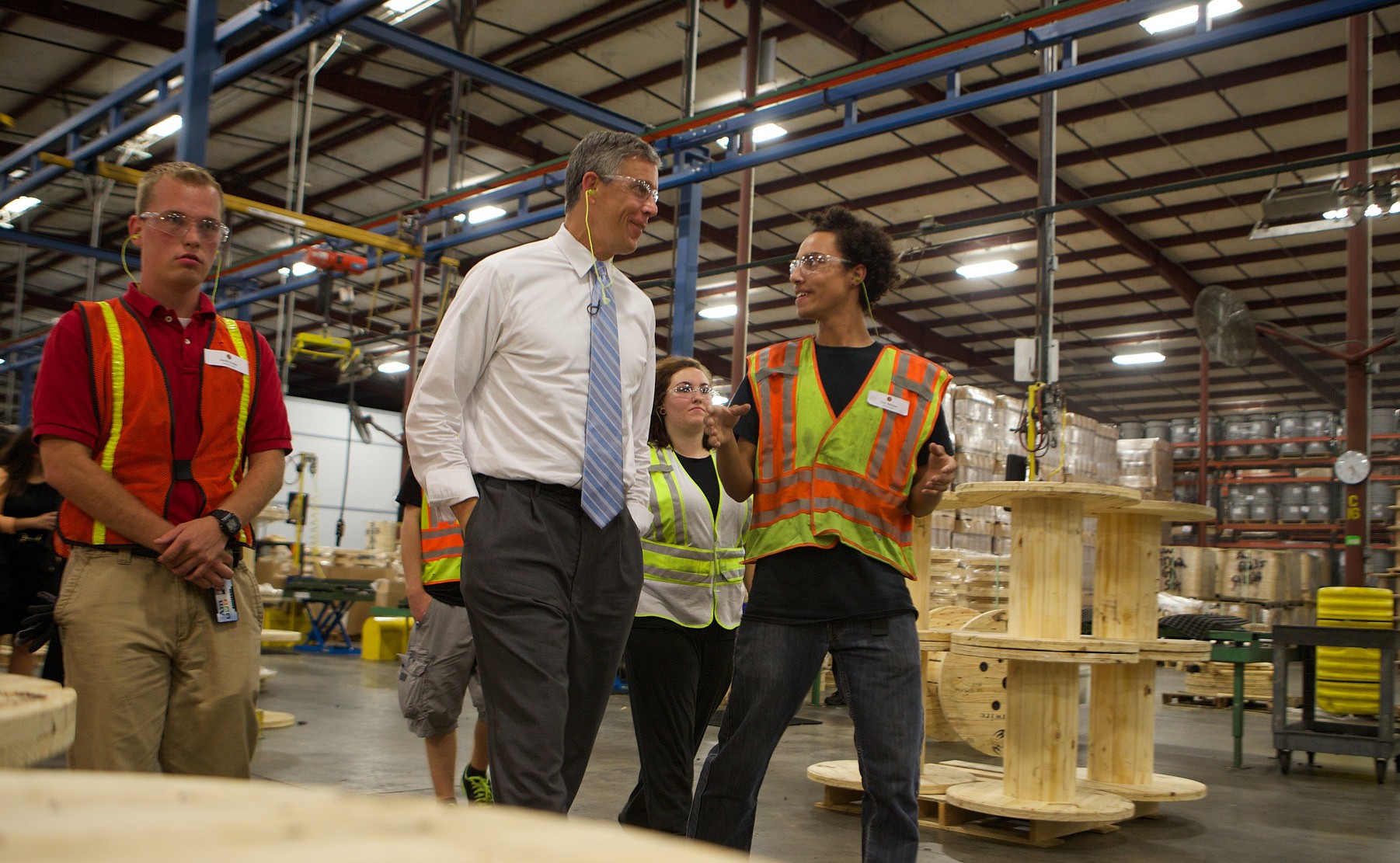
Technical Education at a Community College Improves Graduates’ Future Earnings
•
A new NBER working paper shows how many Career Technical Education programs in California’s community college system increase earnings by larger amounts.
-

The Unintended Consequence of Mandatory Child Care in Chile
•
A new paper from the National Bureau of Economic Research estimates the impact of mandatory childcare on the wages of women in Chile.
-

Occupational Licenses: Reason for Caution or Celebration?
•
A new study finds occupational licenses increase wages, employment, and benefits of those with licenses. While good for entrenched workers, these licenses could be problematic for consumers and non-licensed workers.
-
Who Feels the Effects of Corporate Tax Change?
•
A new study uses a spatial model of local economies to calculate the incidence of corporate income tax on firms, workers, and landowners.
-

Testing Greenspan’s ‘Spare Tire’ Hypothesis: Benefits of Shareholder Protection Laws during Banking Crises
•
Firm-level data across 36 countries suggests that shareholder protection laws do mitigate the adverse consequences of banking crises by allowing stock markets to act as an alternative source of financing.