
Foreign Policy
-
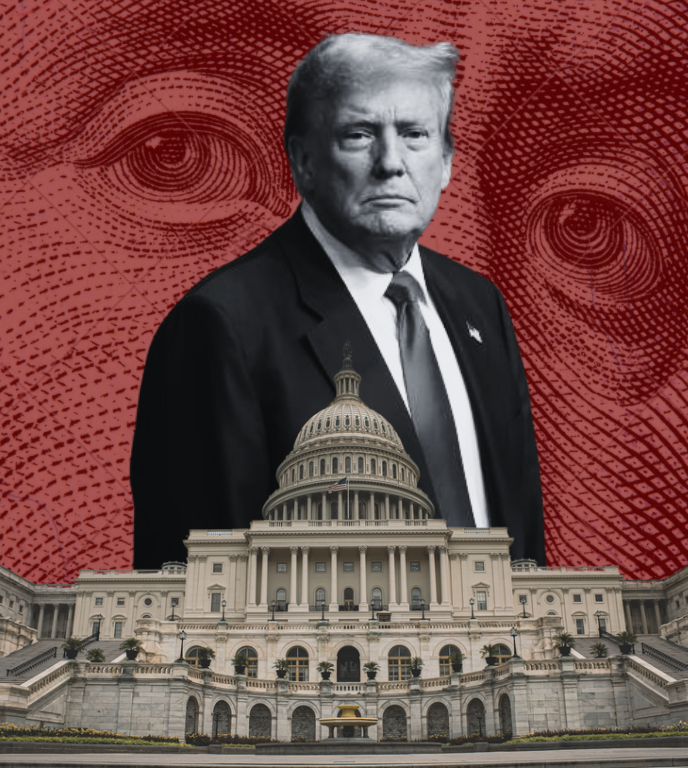
Executive Power Play: Trump and the Return of Impoundment
•
Within the deluge of policies coming out of the second Trump administration, impoundment has resurfaced as a battleground between legislative and executive power. Impoundment is a practice in which the President can refuse to spend federal funds appropriated by Congress. Those who support the restoration of this practice see it…
-

How Do Electoral Gender Quotas Impact Government Spending?
•
Over the past few decades, an increasing number of countries have established gender quotas for elected positions. Typically, these quotas are enacted to address underrepresentation of women in political offices. According to data collected by the United Nations (UN), women represented just “22.8 percent of all national parliamentarians” in June…
-

How Public Support for Foreign Aid Depends on Trust
•
Literature on development aid ranges from analyzing the effectiveness of aid to assessing foreign policy attitudes. However, as many members of society scrutinize government spending and demand transparency, it becomes increasingly necessary to justify a foreign aid budget to a skeptical public. In a detailed study using data from the…
-

Lyndon B. Johnson and John F. Kennedy: How Birth Place Affects Presidential Decision-Making
•
U.S. presidents make up perhaps the most analyzed collection of individuals in the entire world. Researchers routinely mine demographic, electoral and biographical data to gain insights into the composition of the 45-entry dataset and to better understand the decisions presidents make in the White House. Findings range from marginally useful…
-

The Future of US Foreign Policy: An End to Liberal Internationalism?
•
Liberal internationalism, despite what the phrase may imply, does not favor the views of Democrats over Republicans. Instead, liberal internationalism features bipartisan values—including freedom, democracy, an open global economy, and respect for human rights. Defined by international engagement, it promotes liberal states’ engagement with other states’ affairs and wider global…
-

Nuclear Dynamics and Conflicting Effects of Foreign Policy Initiatives
•
The nuclear threat to the United States from Iraq, North Korea, and Syria is of recent vintage. During the last several decades, the U.S. has undertaken negotiations, as well as made preemptive strikes, to thwart these countries’ efforts to possess nuclear weapons with mixed results. Why does the U.S. tolerate…
-

Making Amends with the US: What Should Pakistan’s New Foreign Policy Be?
•
The White House was not happy with Nawaz Sharif, who was disqualified by the Supreme Court in late July on corruption charges. During the past four years, Sharif made efforts to strengthen ties with the neighboring countries, including India and Afghanistan. While his intention to help Afghanistan make a transition…
-

Myth Busting: Robert Pape on ISIS, Suicide Terrorism, and US Foreign Policy
•
This piece, first published on May 5, 2015, is being republished as part of the Chicago Policy Review’s 20th Anniversary Series. Please visit us here to learn more about the series from our Executive Editors. Robert Pape is Professor of Political Science at the University of Chicago specializing in international security affairs. He is the Director…
-

How China’s Neighbors Are Reacting to Its Rise as a World Power
•
Over the course of the Obama administration, particularly under former Secretary of State Hillary Clinton’s leadership, the emphasis of American foreign policy shifted from Europe and the Middle East to Asia. Asia has become an important region due to its rapid economic growth, particularly driven by the rise of China,…
-

Is China ‘Unseating’ the US in the Middle East in a New Energy Landscape?
•
In light of the United States’ reduced need for oil imports, more West African and Latin American producers are competing with China’s traditional Middle Eastern suppliers for market share. The fall in global oil prices, due to increasing supply and slowing demand since mid-2014, has been an economic boon for…
-

Cultural Perspective Is Key to International Relations: An Interview with Former Pakistani Ambassador Husain Haqqani
•
An interview with former Pakistani Ambassador Husain Haqqani on foreign policy with Pakistan, and radical Islam.