
Conflict
-
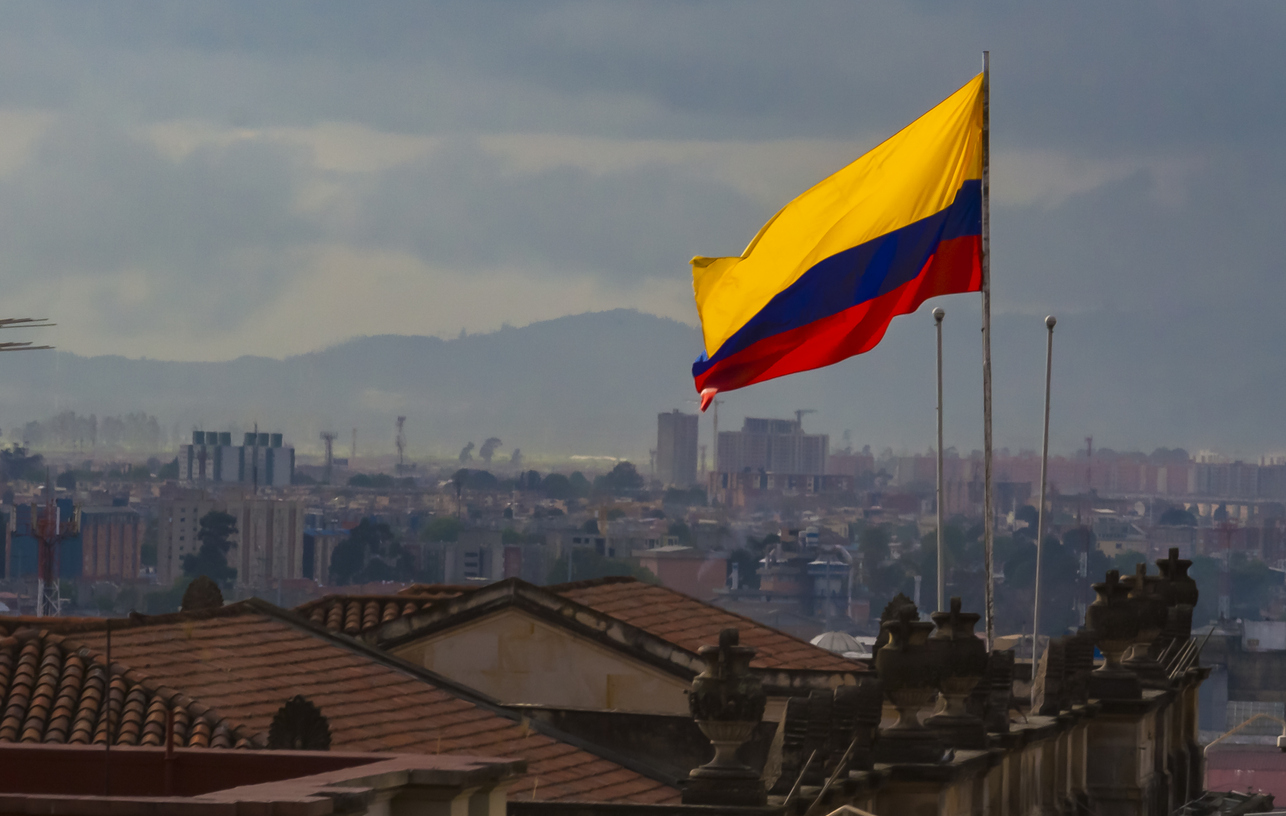
Conflict in Colombia: Fifty Years of FARC and a So-Called Peace
•
“Today is the day you die. Our orders are to finish off all of you.” These were the words of a FARC rebel as he viciously killed a youth in a manner too grizzly to print. The killing and mutilation continued for decades. A slow-burning asymmetric war, known simply as…
-

The Link Between Income and Xenophobia
•
According to the World Bank (2019), close to half the world’s population lives in countries where development goals are hindered by conflict and violence. The UNHCR (2019) claims that by the end of 2018, 70.8 million people had been forcibly displaced from their homes, of whom at least 25.9 million…
-

The Geopolitics of Renewables: The World in 2050
•
Renewable energy is increasingly popular as the urgency for climate action intensifies around the globe. Meanwhile, ongoing technological and economic challenges dominate the debate over the deployment of renewables, marginalizing the discussion of the geopolitical consequences of a renewables-heavy future. However, a research group sponsored by the International Renewable Energy…
-
Healthy Civilian-Military Affairs: A Critical Component of Success in War
•
Common measurements of the likelihood of success of military or national security endeavors tend to be quantitative factors such as budget size, number of personnel, level of technological advancement, or functionality of equipment. However, sociological factors can also be a significant indicator of military success. In an article published in…
-

A Ceasefire that Backfired: Examining the Increase in the Killing of Social Leaders in Colombia
•
Negotiating peace is difficult. However, an equally difficult challenge arises when implementing peace where multiple non-state actors compete for territorial dominance. In “Killing Social Leaders for Territorial Control: The Unintended Consequences of Peace,” economists Mounu Prem, Andrés Rivera, Dario Romero and Juan Vargas found that an increase in the homicides…
-
Understanding Political Polarization: Perceived Threat and Conflict Attitudes
•
Recent election results around the world reflect political polarization that is straining the fabric of democracy. Voting patterns indicate a preference for authoritarian leaders who promise closed borders and promote nationalism as an ideal. In a world where immigration is rising, it is important to understand both the resulting policy…
-

For Climate Migrants, Does the Past Shape Current Perceptions of Conflict?
•
As climate change has altered environments across the globe, it has caused mass migration. For example, an intense drought in Honduras recently led thousands of people to leave their homes and head north to Mexico for an opportunity to earn an agriculture-based living. In Honduras and many other countries impacted…
-

The Conflicting Outcomes of Food Price Shocks
•
Given the preponderance of violence and civil conflict in Africa, development practitioners are eager to understand the relationship between economic conditions and conflict. Conflict can negatively impact education, health, and state capacity—all important components of economic growth. While the negative consequences of conflict are clear, the conditions giving rise to…
-

When Does War Transpire? Unlikely War Onset Under Uncertainty
•
Scholars have attempted to clarify whether uncertainty about the outcome of a potential war—victory or defeat—influences state behavior in international crises. Until recently, there was consensus that when two states in a bilateral context have equivalent capabilities, and therefore experience high outcome uncertainty, they are more inclined to undergo conflict.…
-

The Role of Drought and Climate Change in Syrian Conflict
•
A recent study shows how climate change contributed to the 2007-2010 drought and how this affected conflict in Syria.
-

Climate and Conflict: Why Politicians Should Understand How Climate Change Poses a Threat to Security
•
The review of 55 scientific articles shows that deviations from moderate climate and precipitation patterns systematically increase the risk of violence and conflict, both on an interpersonal level (assaults, murder, rape) and an intergroup level (political conflicts).