
World
-

How Hostile Neighbors Advance their Domestic and Foreign Policy Agendas Through Political Interference
•
Existing policy research cites domestic and systemic factors as primary explanations for political underdevelopment, ignoring the potential impact of international relations and foreign interference. As a result, many foreign policy strategies fail to address threats due to nations sharing borders with countries possessing opposing interests. Is it possible that a…
-
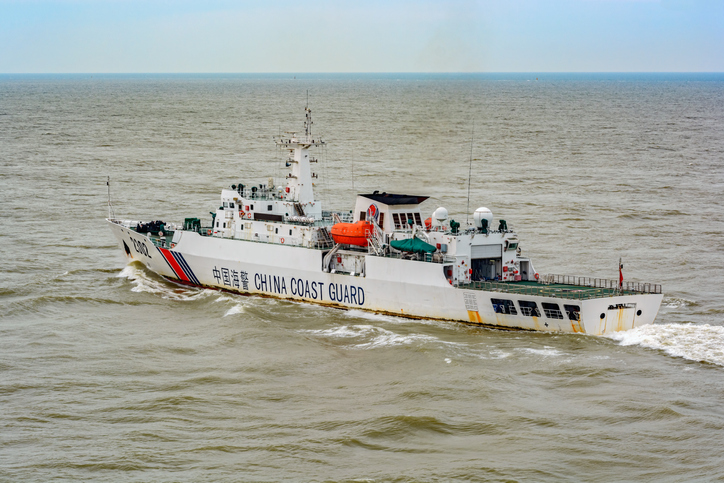
Can China Tip the Balance? The Security Dilemma in East Asia
•
The “rise of China” has been one of the most popular headlines of the 21st century. Books like Destined For War: Can America and China Escape Thucydides’s Trap? and Easternization: Asia’s Rise and America’s Decline have topped best-seller lists. Authors of these texts, as well as other scholars and policymakers,…
-

Misperceptions of Covert Action
•
Discussion surrounding covert action and “hybrid” warfare has recently become a topic of intense interest in academic and policy circles. Russian influence on the 2016 U.S. elections, the increased use of special forces, and the proliferation of cyberwarfare are just a few timely examples of fields relatively devoid of past…
-

China’s Belt and Road Initiative: International Trade’s Transportation Solution?
•
Infrastructure projects are often seen as an important vehicle for economic growth. One of the largest ever attempts at such a project, China’s Belt and Road Initiative (BRI), has allotted massive resources to building infrastructure. Costing an estimated one trillion U.S. dollars, the BRI includes major investments in thousands of…
-
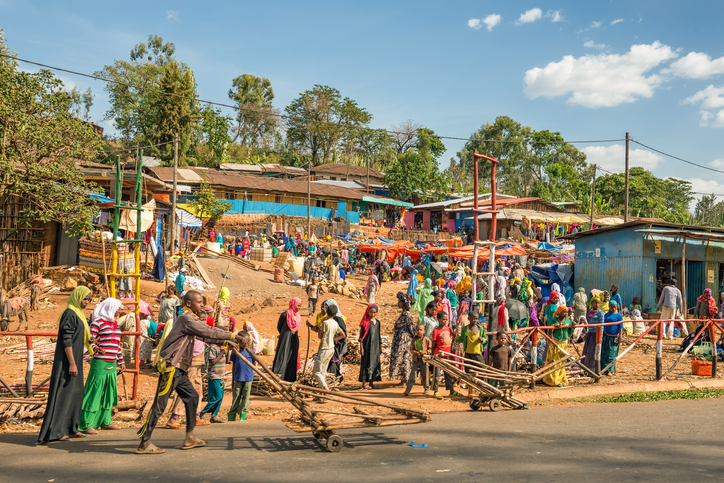
How Decentralization and International Aid Reduce Inequality in Ethiopia
•
In 2017, foreign aid from official donors totaled over $146.6 billion. The bulk of this aid went to decentralizing or decentralized countries, in which regional or local governments are granted powers and resources. Localized governments are believed to be more accountable to voters because they are “downward-looking” and need to…
-

The relationship between Autocracy, Democracy, and Terrorism
•
The manifestation of terrorism in a given country is typically a function of the country’s institutional mechanisms and internal stability. These, in turn, are directly influenced by the political institutions that govern the country. In a recent paper, economist Khusrav Gaibulloev and political scientists Todd Sandler and James Piazza consider…
-

When Formality is too Costly: An Experiment from Benin
•
Many economies in the developing world exhibit a dual structure: the formal sector and the informal sector. While large firms operate in the formal sphere, a majority of small- to medium-size firms operate informally. Estimates of the size of the informal economy vary, but in many countries, especially sub-Saharan Africa,…
-
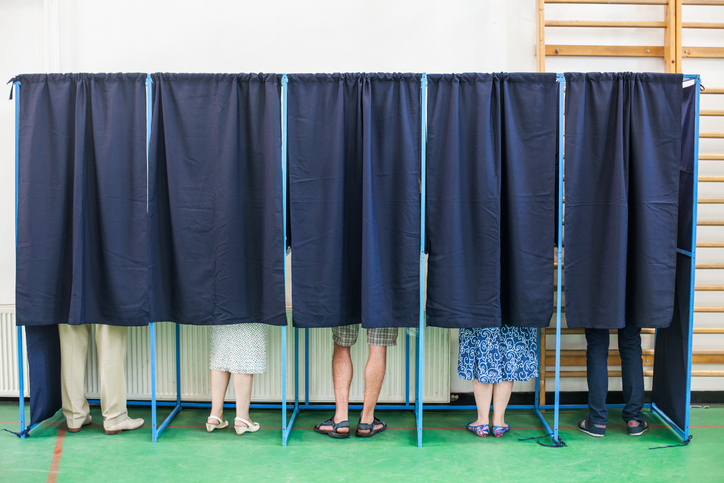
“You Can’t Hack a Piece of Paper”: Jake Braun Talks U.S. Election Security
•
The 2016 hacking of the Democratic National Committee (DNC) provided an urgent and long-overdue wake-up call: U.S. balloting systems are not secure. In the run-up to the 2018 midterm elections and the 2020 presidential race, election security and cyber hygiene have never been more controversial—nor more important. The revelation that…
-

Strategic Motivations of Foreign Aid in a Changing World
•
Gauging developed countries’ motivations for providing development assistance is complex. One theory suggests that governments of developed countries see foreign aid as a tool of realpolitik, using foreign aid to improve relations with recipient countries and prevent political destabilization. In a recent paper, political scientist Sarah Blodgett Bermeo examines the…
-

The Conflicting Outcomes of Food Price Shocks
•
Given the preponderance of violence and civil conflict in Africa, development practitioners are eager to understand the relationship between economic conditions and conflict. Conflict can negatively impact education, health, and state capacity—all important components of economic growth. While the negative consequences of conflict are clear, the conditions giving rise to…
-

How Public Support for Foreign Aid Depends on Trust
•
Literature on development aid ranges from analyzing the effectiveness of aid to assessing foreign policy attitudes. However, as many members of society scrutinize government spending and demand transparency, it becomes increasingly necessary to justify a foreign aid budget to a skeptical public. In a detailed study using data from the…