
Research Analysis
-

The relationship between Autocracy, Democracy, and Terrorism
•
The manifestation of terrorism in a given country is typically a function of the country’s institutional mechanisms and internal stability. These, in turn, are directly influenced by the political institutions that govern the country. In a recent paper, economist Khusrav Gaibulloev and political scientists Todd Sandler and James Piazza consider…
-

Elite Misperceptions: Examining Asymmetry in Partisan Political Participation
•
Do politicians truly represent the populations they serve? Recent research may provide an answer. David E. Broockman and Christopher Skovron’s recent paper asserts that there is a systemic incongruity between true public opinion and elected officials’ perceptions of public opinion. Using a survey that sampled over 3,500 state representatives across seven…
-

From the Vault, February 2013: The Great Gun Regulation Debate
•
This article was originally published on February 25, 2013. Link to original article here. Gun sales in the United States are a huge business; the Federal Bureau of Investigation (FBI) ran 19.5 million firearm background checks in 2012 alone. The recent tragedy in Newtown, Connecticut, has reignited the national debate…
-
La democracia paga: nueva evidenca sobre su impacto en el crecimiento económico
•
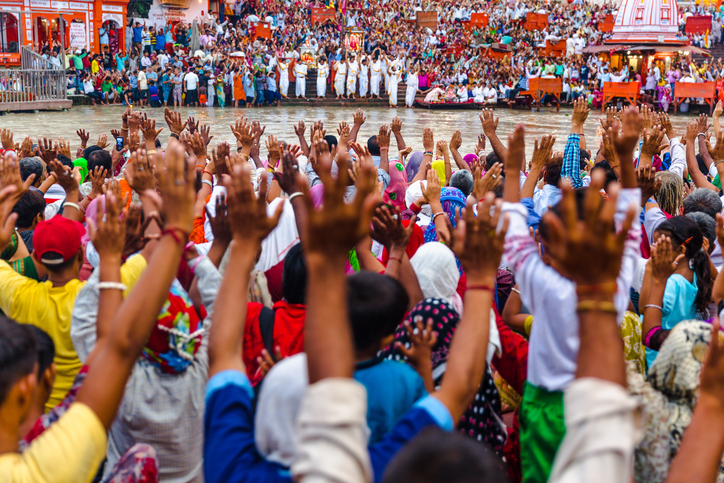
Es tentador ser escépticos sobre la relación causal entre democracia y crecimiento económico, especialmente con ejemplos como China, el eclipse de la primavera árabe o el aumento del populismo en Europa y Estados Unidos. Sin embargo, nueva evidencia empírica muestra que la democratización aumenta el PIB per cápita entre 20…
-

Undocumented Immigration May Make Communities Safer
•
The increase in undocumented immigration into the United States over the past two decades has fueled controversies about public safety impacts. President Trump has stated explicitly, both during his campaign and as president, that undocumented immigrants, specifically from Latin American countries, are “bringing drugs [and] crime” into the country, and that they…
-

Care for the Caretakers: Preventing Workplace Harassment in Home Health Care
•
With the rise of the #MeToo movement, issues of workplace sexual harassment have come to the forefront. While the allegations from women in Hollywood and Washington have received the most public attention, sexual harassment occurs in nearly every industry. In particular, previous research shows that home health workers—89 percent of whom…
-

Is Pooled Financing a Magic Bullet?
•
Today, many developing countries need infrastructure financing to accommodate massive influxes of rural populations to metropolitan areas. Between 2010 and 2030, there will be demand for $15.8 trillion in infrastructure in Asia, $1.3 trillion in emerging Europe, and $1.2 trillion in Latin America. Typical infrastructure investment is the responsibility of…
-

Sexual Adaptation and Miscommunication in the Age of #MeToo
•
At one of #MeToo founder Tarana Burke’s first workshops, 30 high-school girls were asked to write “Me Too” on a sheet of paper if they wanted to anonymously record their experience of sexual harassment. Burke was stunned by how many sheets she counted; two-thirds of the girls wrote “Me Too.” Driven…
-
Beyond Gentrification: How Vacant Lot Upkeep Can Improve Community Safety At An Affordable Price
•
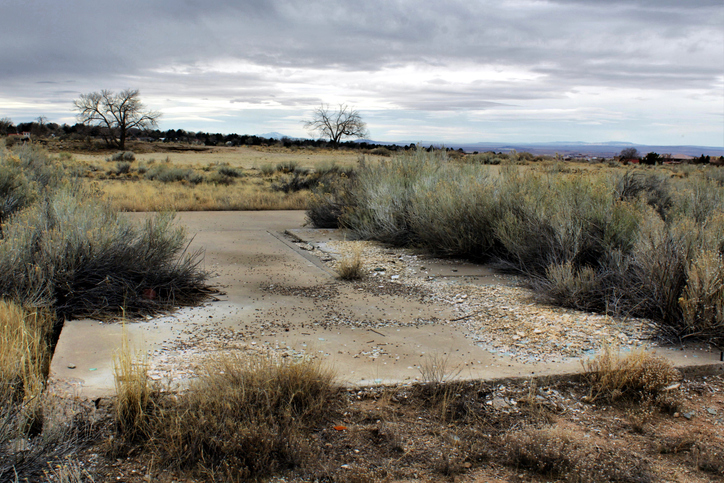
If every square block of abandoned land in American cities were placed side-by-side, the area would be larger than the state of Maryland. In fact, nearly 15 percent of all urban land is either vacant or barren. This limits the economic vitality of communities with vast swaths of unused land, which are disproportionately…
-

The Older, the Better: Aging Nations in the Automation Era
•
In 1938, Alvin Hansen—the “American Keynes”—introduced a phrase that would form the basis of worry for policymakers in developed nations the world over. In the face of plunging birth rates and ever-increasing life expectancies, OECD nations were soon to face a “secular stagnation,” with waves of retirees withdrawing from both…
-

When Formality is too Costly: An Experiment from Benin
•
Many economies in the developing world exhibit a dual structure: the formal sector and the informal sector. While large firms operate in the formal sphere, a majority of small- to medium-size firms operate informally. Estimates of the size of the informal economy vary, but in many countries, especially sub-Saharan Africa,…