
Author: Anne Gunderson
-
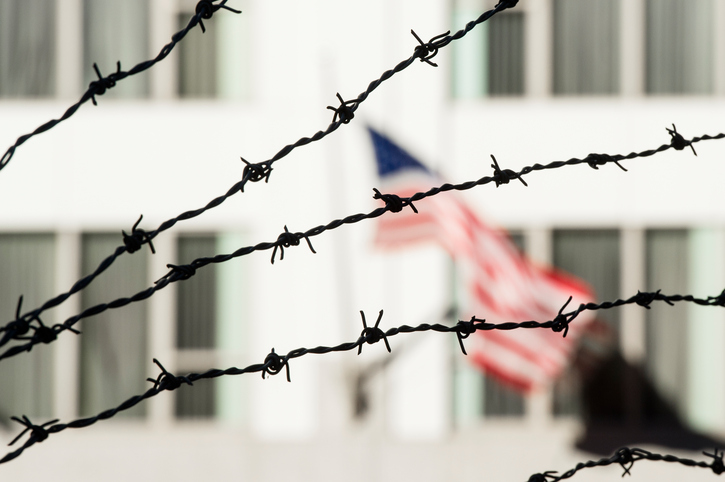
Undocumented Immigration May Make Communities Safer
•
The increase in undocumented immigration into the United States over the past two decades has fueled controversies about public safety impacts. President Trump has stated explicitly, both during his campaign and as president, that undocumented immigrants, specifically from Latin American countries, are “bringing drugs [and] crime” into the country, and that they…
-

The Mixed Effects of Tasers in Civilian-Police Encounters
•
In the early 2000s, police departments across the U.S. began deploying Tasers—devices that deliver an electric current to incapacitate targets—as an alternative use-of-force against civilians. The Taser was considered a non-lethal alternative to firearms and promised increased safety for officers in situations that normally require more physical contact. While outcomes…
-

The Effect of Decriminalizing Prostitution on Public Health and Safety
•
In the United States, prostitution has long been declared illegal for moral, safety, and public health concerns. Recently, states like New Hampshire and California are challenging these laws, opening the topic for public debate. The effects of legalizing prostitution are still largely unknown because they have primarily been studied in…
-

How Nonprofit Organizations Make Their Communities Safer
•
In 2016, the FBI reported a 4.1 percent increase in violent crime from the previous year. With more than 1.2 million incidences, that report claims that cities like Chicago, Baltimore, and Las Vegas—cities that have all struggled with pervasive crime for decades—are driving the recent increase in violent crime in…
-

Reducing Racial Disparities in the US by Increasing Contraception Coverage
•
On October 6, the Trump Administration rolled back the federal requirement that all employers must include birth control coverage in their health insurance plans. As a result, some employees will be asked to pay for contraceptives on their own. By making contraceptives less affordable and accessible, this policy decision may…
-

The Affordable Housing Gap Leaves Low-Income Renters without Options
•
The Urban Institute recently released a report highlighting a significant gap in the amount of affordable housing available, and the number of individuals who need it. This gap has widened in many parts of the country, especially in Cook County, Illinois (the county that encompasses Chicago and neighboring suburbs), which…
-

Breaking the Cycle of Inner City Violence with PTSD Care
•
As many cities across the country actively seek solutions to stem violence, researchers from Emory University, New York University, and the Howard Hughes Medical Institute have confirmed a relationship between Post Traumatic Stress Disorder (PTSD) and exposure to violent behavior among civilians living in urban areas. Though it is most…
-

Analyzing Racial Bias in Selecting Students for Gifted Classes
•
Gifted programs in U.S. schools help many students find the sort of academic success that opens the door to opportunities later in life. A recent Vanderbilt University study explores the depths of inequality in the assignment of black students to gifted programs. The authors utilize data from the Early Childhood…
-

More Questions than Answers: A Review of Gun Violence in Chicago
•
The University of Chicago Crime Lab released a report in January 2017 that details the sudden spike in gun violence that persisted throughout 2016. The Crime Lab analyzed key data in an attempt to discover what triggered the dramatic increase in gun-related crime. Many of the findings were not surprising: Gun violence…
-

Understanding Recidivism Through Child Abuse and Mental Health
•
In 2016, Chicago struggled with the highest number of homicides the city has seen in more than a decade. Lawmakers are now scrambling to find solutions to curb the violence plaguing neighborhoods across the city. Recently, Illinois state legislators representing Chicago have suggested increased sentencing for repeat offenders as a…