
Last Updated on January 8, 2026 by Chicago Policy Review Staff
At 4:21 a.m. EST on January 3, a message appeared on the White House’s official X account that shook the international community. The message stated: “The United States of America has successfully carried out a large-scale strike against Venezuela,” adding that President Nicolás Maduro, “along with his wife,” had been “captured and flown out of the Country.” Within minutes, the announcement spread across diplomatic channels, newsrooms, and social media feeds around the world.
If accurate, the operation appeared to signal the beginning of the end of the Chavez-Maduro dictatorship, an outcome considered unattainable through elections or institutional means. The immediate reaction, however, was not limited to relief. It was accompanied by unease over the legality of the operation itself. Within hours, the United Nations warned that the action could constitute a “dangerous precedent” and expressed that it was “deeply concerned that the rules of international law have not been respected,” emphasizing the need for “full respect — by all — of international law, including the UN Charter.”
These concerns are based mainly on Article 2(4) of the UN Charter which requires states to “refrain in their international relations from the threat or use of force against the territorial integrity or political independence of any state.” It must be noted that the exceptions to this rule are narrow: Security Council authorization or self-defense in response to an armed attack. Neither appears clearly applicable here. The operation was not authorized by the Security Council, and U.S. claims of self-defense, framed as a response to transnational criminal threats, have raised questions toward satisfying the requirement of an armed attack attributable to Venezuela as a state in order to argue self-defense.
While the operation raises potential issues under international law, its ultimate legality is a matter for international legal institutions and tribunals. The more immediate question is whether focusing only on legality overlooks the fact that Maduro’s rule had already lost political and moral legitimacy, making the operation at least arguably legitimate. Recognizing legitimacy in such exceptional cases does not mean endorsing regime change as a general policy tool. Rather, it means acknowledging that extreme failures of political authority can outpace the law’s ability to respond.
The distinction between legality and legitimacy in cases of external intervention is not new. Marko Milanović, when discussing scenarios of external intervention back in 2017 argued that “the position that an intervention is legally prohibited but that it can nonetheless be politically legitimate or morally justified in exceptional circumstances is conceptually perfectly coherent.” In that rationale, he added that “something that is lawful is not necessarily just” and, in that sense, “we can choose to break the law for higher-order considerations, morality and justice, if we are “willing to pay the price of non-compliance.” Nonetheless, he cautioned that breaking the law on such grounds “should not be done lightly,” as it risks undermining the authority of the law.
Venezuela presents precisely such an exceptional case. Maduro’s continued hold on power rested on elections held in 2024 that allegedly granted him victory, despite well documented irregularities. In fact, more than 50 countries publicly refused to recognize the results. The Secretary General of the Organization of American States (OAS) warned that taking the results as valid was “validating electoral fraud” and would mean “turning one’s back on the Venezuelan people who, amid a brutal wave of repression, have continued to demand their right to live in freedom.” Along the same lines, the European Union concluded that “Nicolás Maduro lacks the legitimacy of a democratically elected president.” By the time of his removal, Maduro’s claim to democratic authority, and, with it, the legitimacy of his mandate, had already collapsed in the eyes of much of the international community.
That collapse was mirrored in the regime’s humanitarian consequences which have lasted over a decade. According to Human Rights Watch, as of 2024 more than 20 million Venezuelans, out of a population of roughly 28.8 million, “live in multidimensional poverty due to economic precarity and poor public services,” while 14.2 million face “severe humanitarian needs.” Also, the same organization noted that since 2014 in Venezuela more than 17,000 people have been subjected to “politically motivated arrests.” The United Nations High Commissioner for Refugees estimates that nearly 7.9 million Venezuelans have fled the country in search of protection and a viable future. In parallel, the United Nations Human Rights Council has documented that, during the regime’s tenure, Venezuela’s security forces, particularly the National Guard, have been implicated in systematic human rights violations, including arbitrary detention, gender-based violence, killings, and acts of torture, frequently accompanied by impunity.
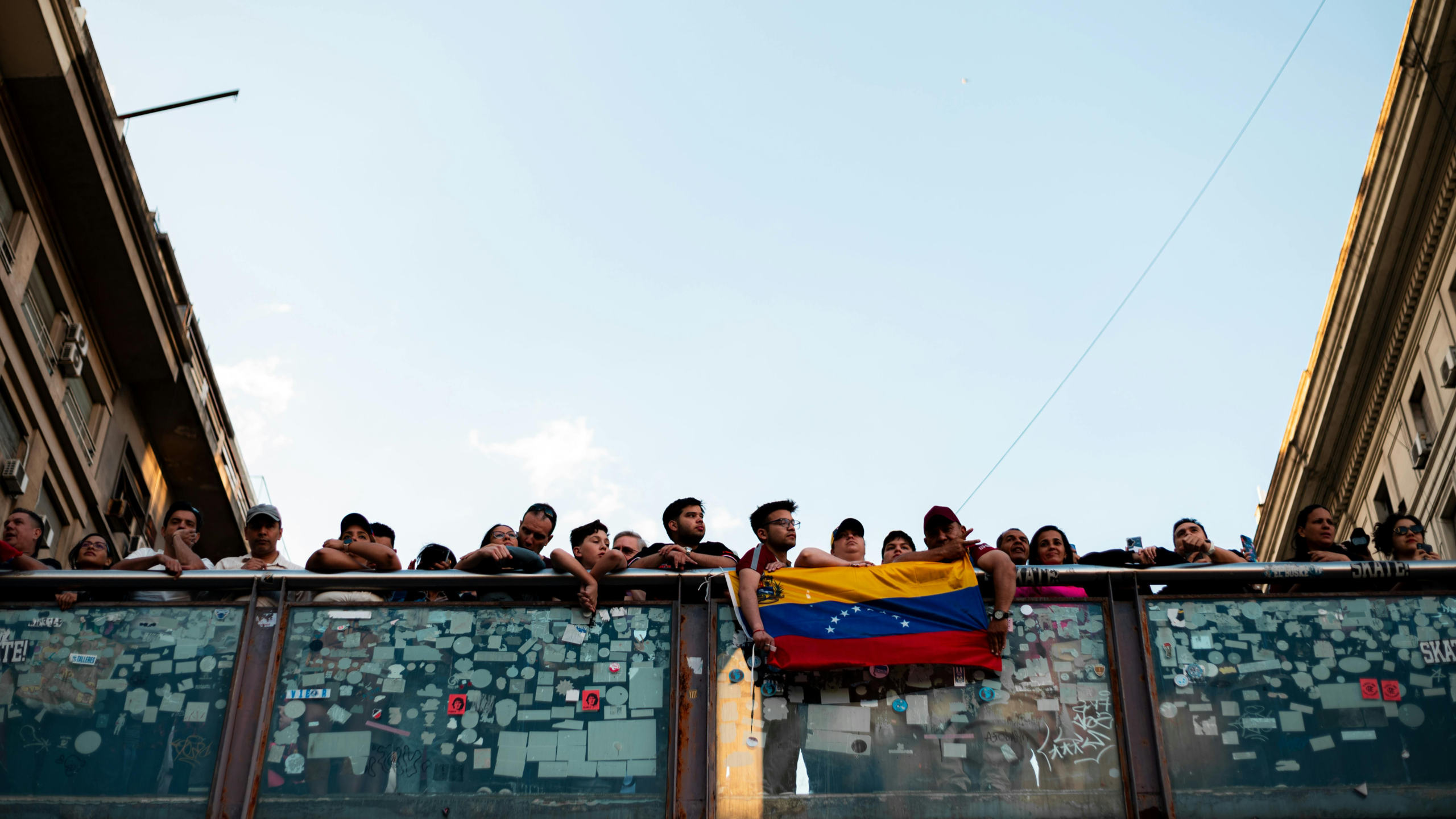
These figures do not determine the legality of external intervention, but they help explain why the prospect of Maduro’s removal was met with public celebration among Venezuelans abroad, particularly in countries hosting the largest Venezuelan communities including Colombia, Peru, the United States, Brazil, and Spain. That reaction matters — it locates claims of legitimacy not in abstract doctrine, but in the judgment of the population most directly subjected to the regime’s rule.
International law is indispensable precisely because it restrains power. But it is not morally self-sufficient. As Milanović reminds us, there are circumstances in which strict compliance with the law may coexist with injustice, and where breaking the law, while acknowledged as such, may be defended as acceptable. Accepting that possibility does not weaken international law; pretending it does not exist risks weakening it far more.
The Venezuela episode thus forces an uncomfortable but necessary reckoning. The question is not whether legality matters. It does, and profoundly so. The question is whether legitimacy can exist where legality is contested, and whether refusing to confront that distinction leaves international law ill-equipped to grapple with the most extreme failures of political authority.
What follows from this distinction is a demand for accountability, not a license for unchecked action. Because legitimacy cannot excuse conduct that violates international law, such claims should instead trigger heightened scrutiny by international legal institutions and multilateral bodies such as international tribunals and human rights protection mechanisms, capable of assessing state responsibility. In such cases, the “price of non-compliance” Milanović describes is not rhetorical: It consists of exposure to legal review, adverse judgments, reputational costs, and, where internationally wrongful acts are established, obligations of reparation. Treating legitimacy as an exceptional justification does not absolve states of responsibility; it reaffirms that even morally defended departures from the law must remain subject to law.